Archive post · Clarinet
Synthetic Clarinet Reeds
The reference page for this instrument, clarinet: key, transposition, tuning notes and frequencies, is built from published maker and university sources and dated. This post is kept as it was published.
You may have heard about synthetic reeds being used for some instruments, including clarinets.
But what is the big deal with such material? What are the differences between synthetic reeds when compared to cane reeds? Are they better or worse? And are they worth trying?
We’ll answer these questions in this article entirely dedicated to synthetic reeds.
Cane Vs. Synthetic Reeds – Advantages and Disadvantages
Cane Reeds Characteristics
Traditional cane reeds are made of a plant named Arundo Donax. It’s a large cane plant that resembles bamboo and creates the traditional sound heard on most recordings.
However, like other similar materials such as wood, cane reeds change shape depending on moisture. They “warp”, just like wood would change shape while drying in the sun.
Also, they require moisture to vibrate at their full potential while playing. As they are biological material, every reed plays slightly differently.
Out of a box of reeds, only a few might create the desired sound. Over time they deteriorate and break down, losing their original sound and losing the ability to vibrate. As well, they often take some time to “break-in”.
Synthetic Reeds Characteristics
Because of the issues described above for cane reeds, most professional clarinet and saxophone players spend an incredible amount of time selecting and modifying cane reeds in order to have them play the best and be as consistent as possible.
If you ask any professional clarinet player about reeds, chances are they consider them quite a burden.
For the beginning clarinet player, the cost of replacing reeds may create a discouragement.
To try to address these problems, manufacturers have been trying for many years to create a synthetic reed that is not made of cane. They are looking for something that can be consistent, but produce the same beautiful tone as a cane.
Synthetic reeds do address many of the problems of cane reeds.
Are Synthetic Reeds Better or Worse than Cane Reeds?
In terms of whether synthetic reeds are better or worse, it really depends on what you are using them for.
For marching bands or instances where you would be exposed to lots of temperature changes, synthetic reeds win. They are reliable and can take a beating, and can be used again and again.
In terms of tone quality, many players find that they can’t match the tone of cane with synthetic. However, if you find a synthetic reed that can come close to cane, you may want to stick with that.
Synthetic reeds are extremely consistent, as they are manufactured and not made of organic material. However, the response of the reed, as well as the tone, is generally compromised in synthetic reeds. Most players still prefer cane reeds to synthetic.
We could resume as the general advantages of cane reeds being a better response and better tone.
On the other hand, synthetic reeds are more consistent and can last longer, potentially leading to lower costs over time.
However, remember that every player is different, and some will find they can get a decent tone out of a synthetic reed.
What Are the Most Known and Reliable Synthetic Reeds?
Let’s go over a few different brands of synthetic clarinet reeds, the ones that are most commonly known and used by different level clarinetists:
Bari
These reeds come in models labeled Elite, Star, and Original.
The response of Bari reeds is excellent. However, the tone quality is extremely bright and edgy, which I found to be a bit too much in most situations.
They run from $15 to $35 depending on the model.
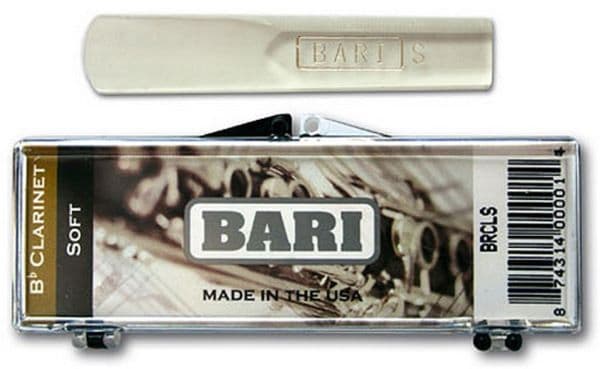 A package of Bari synthetic reeds
Fibracell
These reeds look like cane reeds. They are made of Kevlar.
Overall, the reviews of these reeds are pretty good.
When I tried them, they generally had a good response and tone, but in my opinion, they aren’t good enough to beat cane reeds. But they are used by many players and are a popular option for synthetic reeds.
They are between $15 and $25.
 Fibracell clarinet reeds: Above: the reed for B flat clarinet. Below: the reed for the bass clarinet
Harry Hartmann Fiberreed
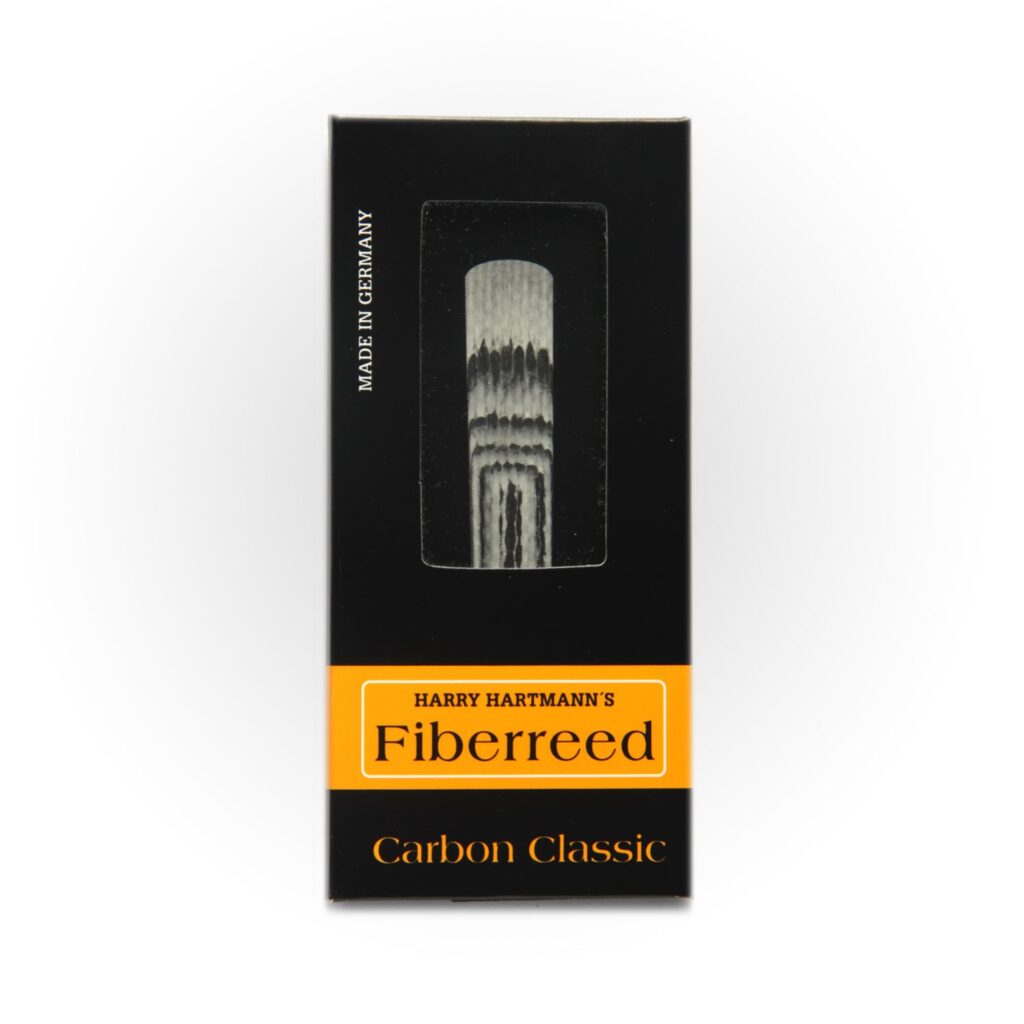
These reeds come in Carbon and Carbon Classic, Hemp and Hemp German cut, and Natural.
The natural reeds are designed to emulate the feel and sound of natural cane. The hemp reeds are made of hemp and tend to run a bit softer than other reeds – it’s recommended to order a stronger strength than normal.
Reeds made out of carbon, create a very pure and brilliant sound. These reeds come close to cane in tone and response, but some clarinet players find them difficult to play. I was impressed by these reeds, but I felt they didn’t have the versatility of tones that cane reeds have.
You can get one for between $35 to $45 dollars.
Légère
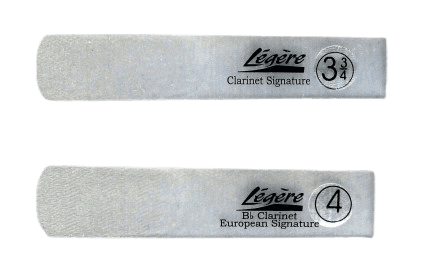 Legere clarinet signature reeds
Légère reeds come in Signature, Classic, and European Cut. Légère reeds are often regarded as the closest to cane reeds.
A study done of reeds found that harmonics in Legere reeds were the closest to cane. However, upon trying them, I was disappointed. The reed did behave like a real reed, but to me, it was more like a bad reed in the box than a reed that I would want to use. Unlike a cane reed where you can file and sand the reed down to make adjustments, the reed is as-is.
These reeds run from $20-$30 for a Bb clarinet.
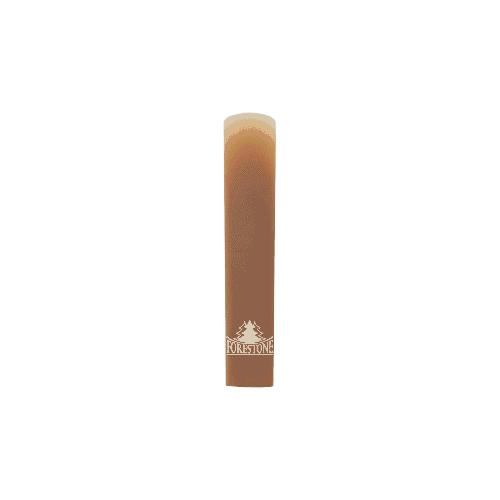
Forestone
Made in Japan, these reeds are very good and have a very classical feel.
I really enjoyed playing them, but they lack a bit of the body of cane reeds.
Silverstein
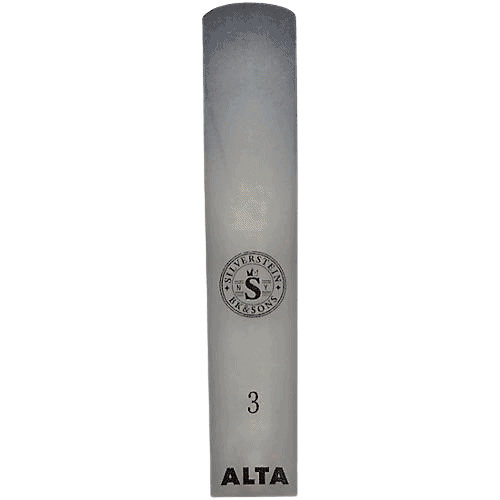
These reeds get excellent reviews, even when paired against Legere.
Interestingly enough, these reeds are designed to be modified with a reed knife or sandpaper. They are also recommended to be wet the first time they are used.
At about $40, these are among the most expensive synthetic reeds.
Best Synthetic Reeds
In our opinion and after testing and reviewing all the ones above, the best contenders are **Legere, Harry Hartmann, **Forestone****, and Silverstein.
If you need a reliable reed for certain situations, then Bari and Fibracell could be your better choices.
What Is Best For Beginner Players? Synthetic or Cane Reeds?
For beginner clarinet players, we generally think that it is more beneficial to start on cane reeds to understand how to get a proper tone.
However, it is handy to have a synthetic reed when you need it. As you improve, you may find that switching to synthetic will allow you to have a more consistent reed to perform with.
How Long Do Synthetic Clarinet Reeds Last?
Synthetic reeds don’t wear out like cane reeds and can be used for months, or even years, without needing to be replaced.
Do You Need to Wet a Synthetic Reed?
They don’t need to be wet in order to vibrate, nor do they warp. They play immediately without needing to be broken in.
Our Other Articles About Clarinets
Plastic vs. Wooden Clarinets ↗
What are the differences between the two types of clarinets?
Selling a Used Clarinet ↗

We answer to the most common questions for players willing to sell their clarinet
Buying a Used Clarinet ↗

If buying a used clarinet is among your plans read this info guide.
Renting a Clarinet ↗

Why renting a clarinet can be a great alternative for your first instrument or to serve as a backup.

Author: Cooper White
- Cooper is a Multi-Instrumentalist, with vast knowledge and experience performing with Sax, Flute, Clarinet, Keyboard, and Blues Harmonica.
- With a Bachelor’s Degree from the Berklee College of Music in Boston and studies in Classical Performance at the Lionel Hampton School of Music, he has also more than 10 years of performing professionally, whether while road touring in the U.S. or playing on different cruise ships.
- He is also an entertainer with his shows, as well as a producer of his music and others. Whenever he is not performing, he teaches individual online classes. He mostly plays Jazz, Classical and Popular music.